TI-Rwanda Reveals Some of the Most Visible Errors in Public Financial Management Despite Progress
Kigali, April 2, 2026 — Transparency International Rwanda (TI-Rwanda) has released an analysis of the Auditor General’s reports on districts and the City of Kigali for the 2023/2024 fiscal year, highlighting a rise in irregularities in public financial management despite notable progress.
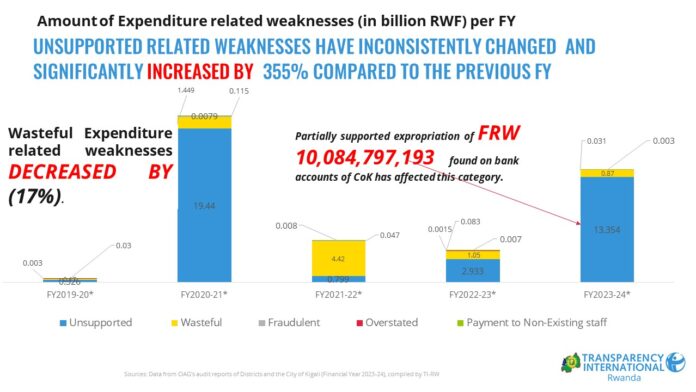
According to the analysis, misused public funds increased by 38%, rising from RWF 1.132 billion to RWF 1.343 billion. Unsupported expenditures saw a sharp surge of 355%, reaching RWF 13.354 billion, accounting for 93% of all reported financial irregularities.

The report emphasizes that non-compliance with laws and regulations remains the leading cause of these irregularities, representing over 63% of all cases. Issues related to public procurement account for 40% of the identified errors.
Additionally, asset management continues to pose challenges, with cases of misuse and poor maintenance of public property.
Delays in fund disbursement—particularly for social welfare programs targeting vulnerable populations—were also noted as having negative consequences.
However, the report acknowledges progress made.
For the first time, 19 districts achieved at least a 70% implementation rate of audit recommendations. Overall, the implementation rate improved from 57.16% to 71%, indicating strengthened oversight and follow-up mechanisms.
TI-Rwanda Executive Director Apollinaire Mupiganyi stressed the need to translate these findings into concrete action:
“The issues identified are not new. Addressing them requires strong, coordinated, and practical solutions.”
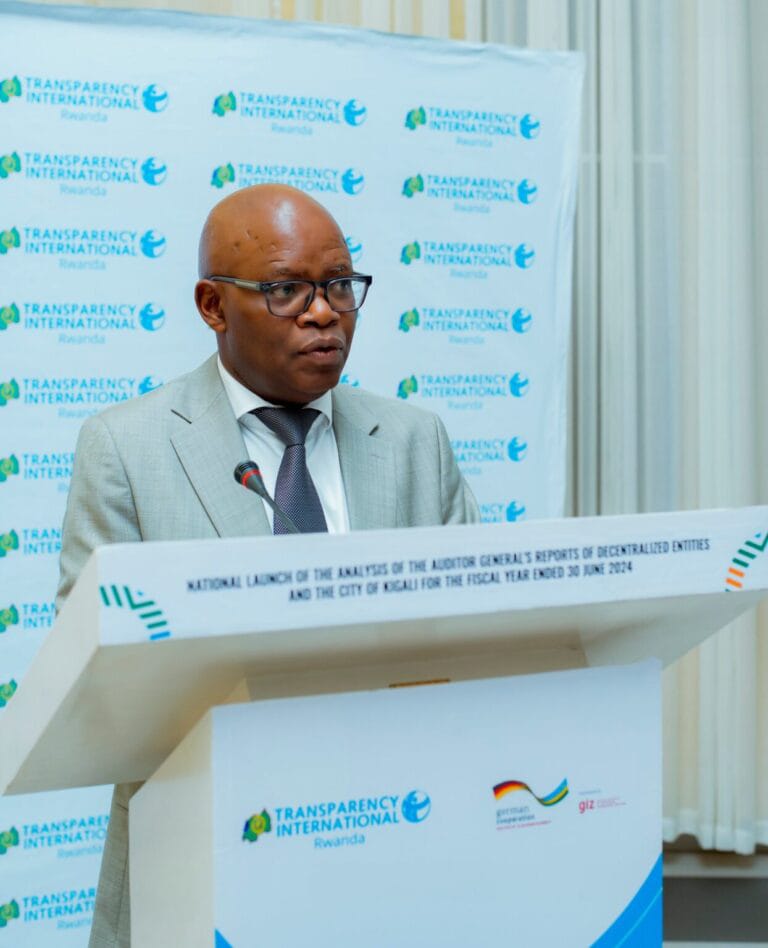
The executive Director Apollinaire MUPIGANYI
TI-Rwanda specifically recommends strengthening compliance with procurement regulations, improving planning processes, enhancing public asset management, and ensuring timely disbursement of funds for key development projects.
The analysis aims to promote transparency, reinforce accountability systems, and support evidence-based decision-making in Rwanda’s public financial management